
Getting a Marriage License in Essex County
In New Jersey, marriage licenses are issued by the Local Registrar of Vital Statistics in your municipality, not by the County Clerk or the court. Apply in the New Jersey town where either applicant lives, and the license is valid statewide. If neither applicant lives in New Jersey, you apply in the town where the ceremony will take place, and the license is good only there.
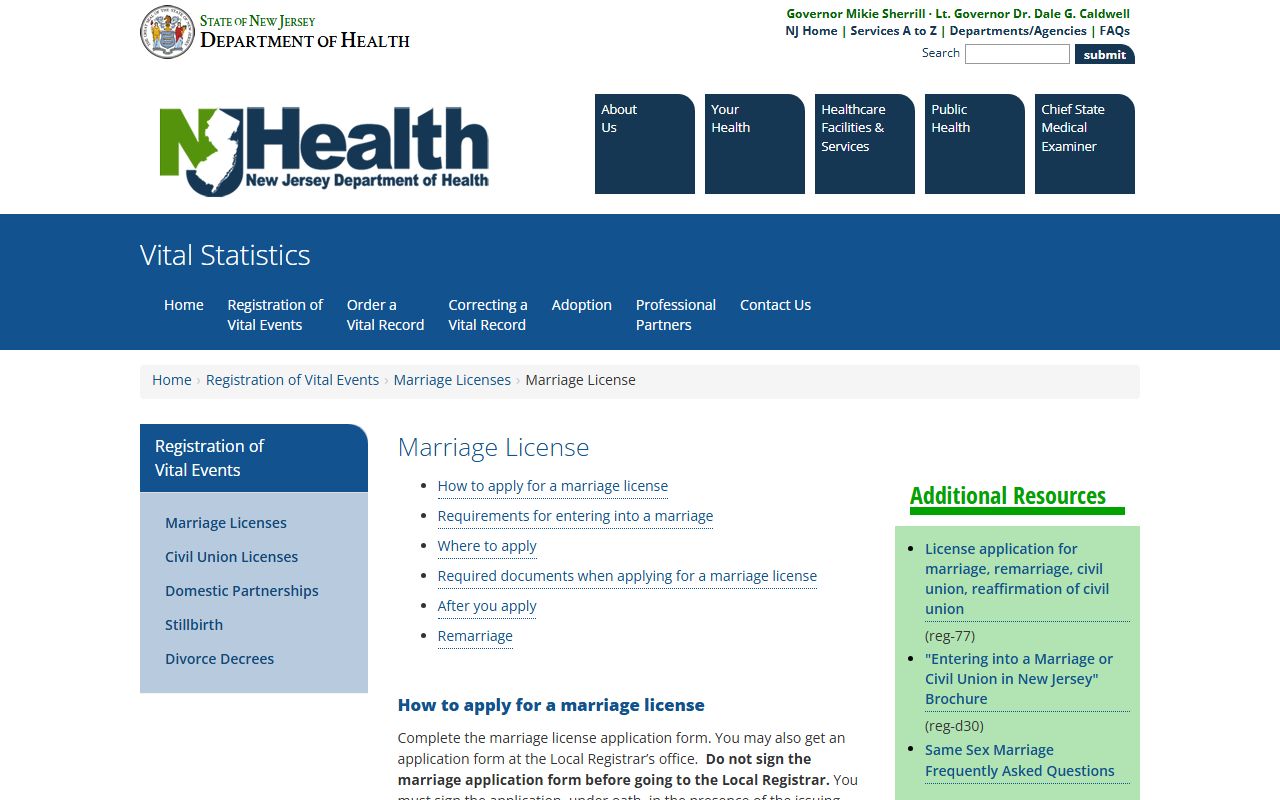
The state sets the core rules. Both applicants must be at least 18, and neither can already be in a marriage, civil union, or domestic partnership recognized by the state. The Department of Health publishes the license rules and the documents you must bring.
See the New Jersey marriage license rules that govern Essex County applications.
The Essex County Clerk does perform some civil ceremonies, but that service was suspended on the page reviewed, and it is separate from the license itself.
How to Apply for a Marriage License
The process runs through the local registrar and takes a little planning because of the waiting period. Do not sign the application in advance, since you sign under oath in front of the issuing authority. Bring all required documents to avoid a second trip.
- Get the marriage license application form, but do not sign it yet.
- Go to the Local Registrar in the town where one of you lives.
- Bring proof of identity, proof of residency for one applicant, and a Social Security number if a U.S. citizen.
- Bring a witness who is 18 or older and the $28 application fee.
- Sign the application under oath before the issuing authority.
- Wait through the 72-hour period before the license is issued.
There is no 72-hour wait for a remarriage if you supply certified proof of the existing marriage. The license stays valid for six months from the date accepted, and a registrar may extend it to one year. The waiting period starts when the application is filed with the Local Registrar, so plan the visit at least three days before the ceremony date to be safe.
Marriage License Application Fields
The application collects identity and residency details for both applicants. Foreign-language documents need a certified English translation. The table lists the main fields and what each requires.
| Field | Required | Notes |
|---|---|---|
| Applicant names | Yes | Both parties. |
| Residence | Yes | Sets the issuing town and where the license is valid. |
| Proof of identity | Yes | Driver license, passport, or state or federal ID. |
| Social Security number | Yes for U.S. citizens | Kept confidential. |
| Witness 18+ | Yes | Must appear per the local process. |
| Signature under oath | Yes | Do not sign before appearing. |
Only one license is granted per application. If the license expires before use, a new application and another $28 fee are required.
Essex County Marriage and Divorce Fees
Fees split between the state vital records system and the courts. The marriage license application fee is set by the state, while divorce certificate and judgment fees come from the Judiciary. The table lists the documented amounts.
| Item | Amount |
|---|---|
| Marriage or civil union license application | $28 |
| Domestic partnership registration | $28 |
| Certificate of Divorce | $10 |
| Certified copy of final judgment of divorce | $25 |
Certified copies of vital records, such as a marriage certificate, are ordered through the state Department of Health fee schedule.
See the New Jersey vital record fee schedule for certified marriage and other vital record copy costs in Essex County.
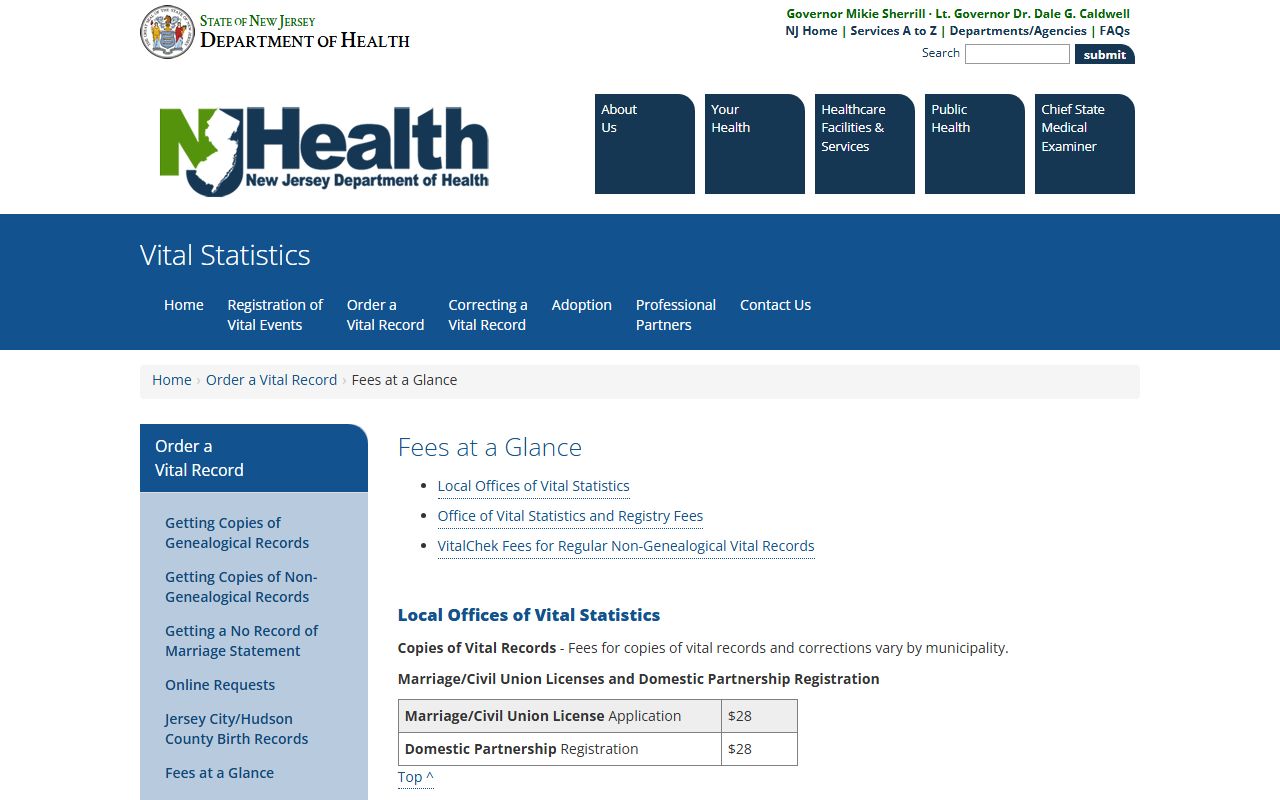
Check the current fee page before you order, since vital record copy fees are set by the state and can change.
How to Look Up Essex County Marriage Records
A marriage license application and the certified marriage record are vital records, issued and held through the local registrar and the state Department of Health. To get a certified copy of a marriage record, use the state vital records order process. The county courthouse does not issue marriage certificates. Because the record sits with the town that issued the license and the state vital records office, start there rather than at the Superior Court, which handles divorce rather than marriage.
Keep in mind that the Social Security number on an application is confidential, and certified vital records are released under state rules to eligible requesters. A marriage record proves the marriage happened, while the license is the document that authorized it, so ask for the certified record when you need legal proof for a name change, benefits, or immigration.
Filing for Divorce in the Family Division
A divorce in Essex County starts in the Family Division of the Superior Court. New Jersey Courts publish self-help divorce packets for both contested and uncontested cases. A filing generally includes the complaint, required certifications, a case information statement where needed, the filing fee or a fee waiver request, and service papers for the other party.
Court staff can explain the process and point to the right forms, but they cannot give legal advice or tell you whether to file. For help, the self-help resources and, in some matters, legal aid can guide a person who does not have a lawyer. The current Essex divorce filing fee should be confirmed against the NJ Courts fee schedule before filing.
How to Find Essex County Divorce Records
Divorce is handled differently. In New Jersey terms, divorces are dissolution cases filed and heard in the Family Division of the Superior Court at the county level. Essex divorces are filed in the Essex Family Division. After the judgment, the case closes, and older files are stored or archived by the Superior Court Clerk's Office in Trenton.
The NJ Courts dissolution inventory lists Essex case year 2019 as transferred to the records center as of early 2024, so more recent files may still sit with the Essex Family Division. If you do not know the FM docket number, the Superior Court Clerk's Office Customer Service can search by county, approximate year, and party names at 609-421-6100. The FM prefix marks a dissolution case, which helps confirm you are tracking a divorce rather than another type of family matter.
- Confirm the divorce occurred in Essex County and note the approximate year.
- Find the FM docket number if you can, or call SCCO Customer Service at 609-421-6100.
- Check whether the file is at the records center or still with the Essex Family Division.
- Decide whether you need a certificate or the full file.
- Be ready to prove you are a party or attorney, or provide a court order.
Getting Certified Copies
Divorce documents are not open to everyone. The Judiciary releases divorce documents only to a party or an attorney of record, unless the requester has a court order. A party who requests records must include valid state ID. A Certificate of Divorce costs $10 and shows the county of venue, docket number, party names, the final judgment date, and the court seal.
For the full judgment, a certified copy of the final judgment of divorce costs $25, plus any added copy fees for attachments such as a property settlement agreement. Certified marriage records, by contrast, come from the state vital records system rather than the court. If you only need to prove a divorce happened, the $10 certificate is usually enough, while the certified judgment is the document other courts and agencies often require.
Note: A certificate of divorce is a short proof document, while the full case file holds the complaint, orders, and judgment.
New Jersey Vital Records Office
The New Jersey Department of Health runs the statewide vital records system, including the marriage license framework and certified copy orders. Local registrars issue licenses, and the state office handles certified vital record requests and fees. That is the right office for a certified marriage record.
For divorce, the court system is the source, not vital records. The Family Division holds open files, and the Superior Court Clerk's Office holds many archived ones. Knowing this split is the single most useful step in an Essex County marriage and divorce records search. A common mistake is sending an OPRA request to the county for a divorce file, which goes to the wrong place, since court case records follow the Judiciary process instead. Match the record to the right office first, and the rest of the search gets much simpler.