
The New Jersey Open Public Records Act
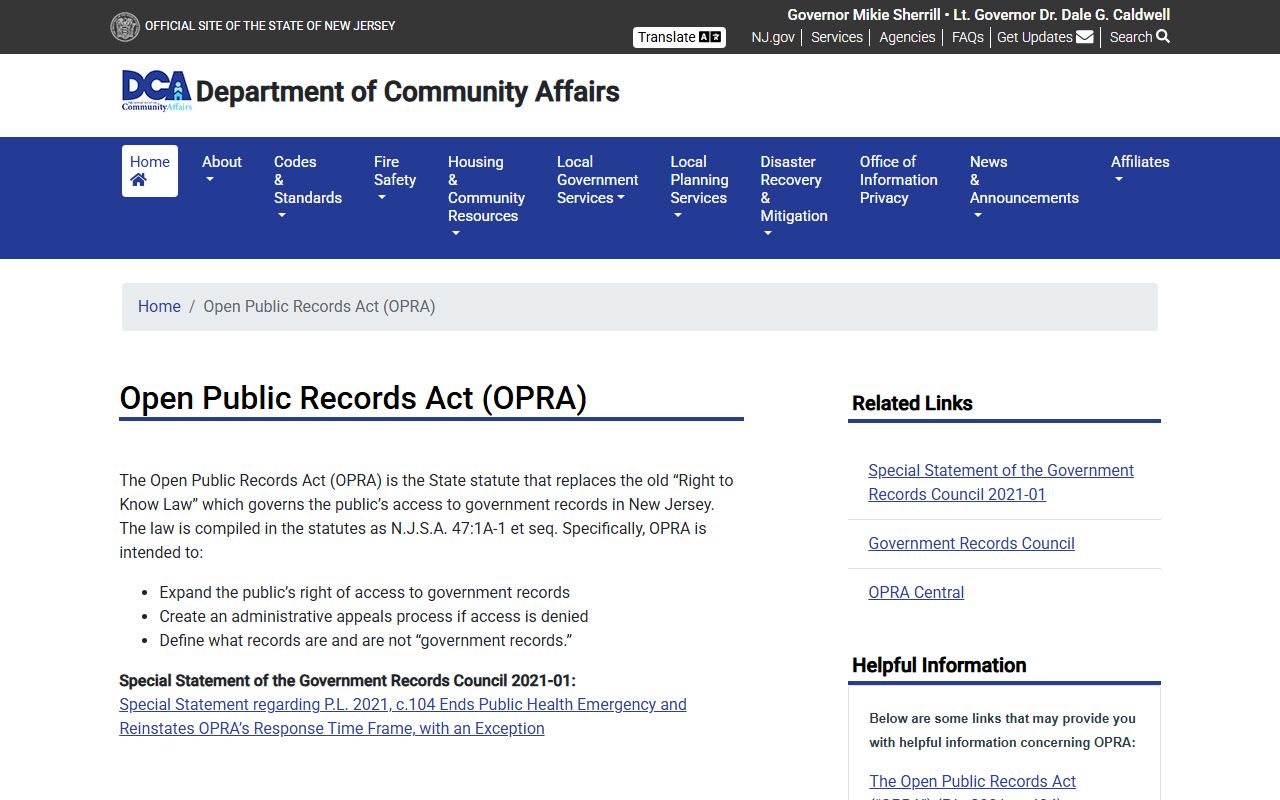
New Jersey's open-records law is the Open Public Records Act, found at N.J.S.A. 47:1A-1 et seq. It replaced the older Right to Know Law, widened access to government records, and created an administrative appeal path for denials. The Department of Community Affairs describes the right of access and what counts as a government record under the law.
OPRA applies to county and state agency records, not to court case files. For Essex, use OPRA for county executive agencies, the Sheriff and Corrections administrative records, and Register and Clerk county records. Use the court process for case files.
See the state OPRA overview that frames how Essex County public records requests work.
The same law sets response duties and copy fees, which the county applies through its own request form.
What Records the County Keeps
Essex County agencies hold a wide range of non-court records. The County Clerk handles passports, notary oaths, resident IDs, business trade names, elections, and liens and judgments. The Register of Deeds and Mortgages records property documents. The Sheriff and Corrections keep administrative and report records. The county executive offices keep budgets, contracts, and agency files.
Court records are the exception. Case files, dockets, orders, and judgments come from the Judiciary, not from an OPRA request. The County Clerk's own statistics give a sense of the volume, with hundreds of thousands of trade names scanned online and thousands of OPRA information requests processed each cycle.
Many of these records have their own search tools or order processes outside OPRA. Land records, for example, are searched through the Register's online system, and vital records like marriage and death certificates come from the state and local registrars. OPRA is the catch-all for county agency documents that do not have a dedicated public portal.
- County Clerk records, such as trade names, notary oaths, and resident IDs.
- Register records, such as deeds, mortgages, and liens.
- Sheriff and Corrections administrative and report records.
- County budgets, contracts, and agency documents.
Why Court Records Are Different
This is the point that trips up most Essex requesters. Court case files are not OPRA records. The Judiciary is treated separately from ordinary executive-branch agencies, so case files, dockets, orders, and judgments follow New Jersey Court Rule 1:38 and the courts' own copy process. An OPRA request to the county for a divorce file or a criminal docket goes to the wrong office.
The rule of thumb is simple. If a judge, a clerk of court, or a case is involved, use the court process. If a county agency created the record in its administrative work, use OPRA. The Essex County Clerk homepage even states the Clerk is not the OPRA custodian and directs requesters to the county custodian instead, which underlines how carefully the county separates these channels.
How to File a Public Records Request in Essex County
Essex County uses a Request for Public Records form sent to the county custodian. The OPRA custodian can be reached at 973-621-5241 and at oprarequests@counsel.essexcountynj.org. The most important step is to describe the records clearly, because a vague request is hard to fill and may be denied.
Decide how you want the records and what you will pay before you submit. The form lets you set a maximum authorized cost, which matters for large requests.
- Identify the specific records and the office likely to hold them.
- Complete the Essex County Request for Public Records form.
- Choose a payment method and a delivery option, such as pickup, mail, or on-site inspection.
- Sign the form, including the conviction certification under penalty of law.
- Send it to the county OPRA custodian and keep a copy.
- Track the response, which is generally due within seven business days.
Public Records Request Form Fields
The county form collects contact details, payment and delivery choices, and a clear description of the records. It also includes a certification about indictable convictions under N.J.S.A. 2C:28-3. The table lists the main fields.
| Field | Required | Notes |
|---|---|---|
| Name and contact | Yes | First, last, mailing address, phone, and email. |
| Maximum Authorized Cost | Optional | The amount you agree to pay. |
| Payment method | Yes | Cash, check, or money order. |
| Preferred delivery | Yes | Pick up, U.S. mail, or on-site inspection. |
| Conviction certification | Yes | Certify under penalty of N.J.S.A. 2C:28-3. |
| Record Request Information | Yes | Be specific, and note the type of access wanted. |
The custodian side of the form tracks a reference number, estimated cost, and a disposition such as filled, partial, or denied.
Response Timelines
OPRA sets a response clock. The Essex form reflects the seven-business-day framework, and the custodian must explain if any part of a request cannot be delivered in that window. Extensions happen when records are voluminous, archived, need review or redaction, or require input from another agency.
No records are released until payment is received. Copying, postage, delivery, and any special service charge can all affect the final cost, so the custodian may give an estimate and ask for a deposit first. New Jersey also overhauled OPRA in 2024, and some access rules changed, so check the current process before you file a large or complex request. The change affects county agency records rather than judiciary case files, which stay under the court rule.
Public Records Fees in Essex County
Standard copy fees are set by law, with extra charges for unusual work. The table lists the documented OPRA copy fees and some office-specific charges.
| Item | Amount |
|---|---|
| Letter-size copy, per page | $0.05 |
| Legal-size copy, per page | $0.07 |
| Sheriff report or document, per page | $2 |
| Register name list for public notices | Greater of $0.25 per name or $10 |
| Municipal lien search | $10 |
Special service charges can apply when a request takes extraordinary time or effort, and photographs from the Sheriff carry their own per-size fees.
Records That Are Exempt
Not every government record is open. OPRA lists records excluded by statute, court rule, executive order, privilege, privacy, and security concerns, plus advisory and deliberative material. Court records sit under Court Rule 1:38 rather than OPRA. The County also cannot be forced to create a record that does not exist, such as a title search.
If a record is partly open and partly exempt, the custodian may release it with redactions rather than deny it outright. That is common with documents that contain personal identifiers. A denial should state a reason, and the custodian's disposition options range from filled to partial to denied, which gives you a clear basis for any appeal.
If Your Request Is Denied
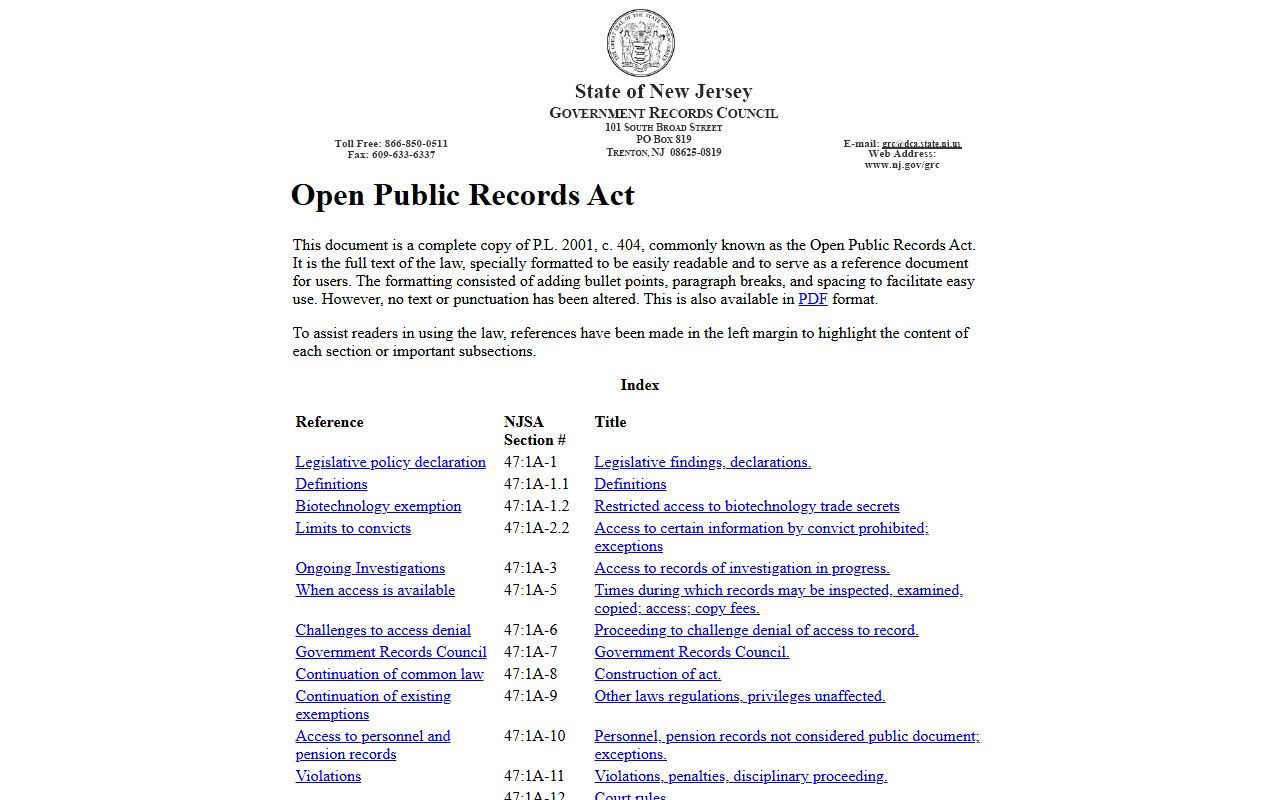
A denial is not the end. New Jersey gives requesters an appeal path. You can challenge a denial through the Government Records Council, which administers OPRA, or through the Superior Court. The Government Records Council also publishes the text of the law and guidance on how access works.
See the Government Records Council OPRA page for the law and the appeal process behind Essex County public records.
Keep your original request, the response, and any fee estimates, since an appeal turns on what was asked and what was provided. A well-documented request, with dates and a clear description, is far easier to defend if the county denies or partly fills it.
How to Draft a Specific Request
A clear request gets a faster answer. The Essex form warns requesters to be as specific as possible and to state the type of access wanted, such as copies, inspection, or examination, and the data medium if data is involved. Vague requests for "all records" about a topic invite delay or denial, because the custodian cannot reasonably identify what you want.
Name the agency, the kind of document, and a date range whenever you can. Ask for a contract by its title or vendor, a report by its date, or a payment by its check number. If you set a maximum authorized cost, the custodian can estimate the document cost, delivery cost, and any deposit before doing the work. That keeps a large request from stalling over an unexpected bill.
Remember that the county does not perform title searches and will not create a record that does not already exist. OPRA gives access to records the county keeps, not to answers or new analysis, so frame the request around documents that already exist.