
Essex County Superior Court Overview
New Jersey uses one statewide trial court, the Superior Court, divided into county vicinages. Essex is Vicinage 5, the largest in the state. The Assignment Judge for the vicinage is Avion M. Benjamin, and the Trial Court Administrator is Edward D. Wingren III. Court hours run Monday through Friday, 8:30 a.m. to 4:30 p.m., and the general court phone is 973-776-9300.
The Superior Court splits into divisions and parts that handle different work. The Law Division takes major civil and criminal cases, the Chancery Division handles equity, and the Family Part hears divorce and related matters. The Special Civil Part handles smaller claims and landlord-tenant cases.
Because Essex is the busiest vicinage, the court carries a large and varied docket, from foreclosure to serious felony cases. The Sheriff's Office secures the court buildings, a duty set by the state constitution, which is why visitors pass through screening at each entrance. The mix of high volume and tight security shapes how a routine court visit feels in downtown Newark.
How to Search Essex County Superior Court Records
Superior Court case records are searched through the New Jersey Judiciary, not the County Clerk. The Find a Case page leads to the civil and foreclosure case jackets, the criminal case and judgment search, judgment liens, and tax cases. Choose Essex when a portal asks for a county, and use a docket number when you have one.
Different divisions feed different portals. A civil suit lives in the case jacket system, a criminal matter in the criminal search, and a family case carries strong access limits. For certified copies or closed files, the request runs through the Superior Court Clerk's records process. The full walkthrough sits on the court records page.
First-time users of the civil and foreclosure case jacket must register before they can open a record. If a search returns nothing, the case may be sealed, archived, or filed under a different docket prefix, since New Jersey dockets use letters such as L, F, and FM to mark the case type.
Essex County Superior Court Buildings
Essex court business is spread across several buildings in downtown Newark rather than one courthouse. Each building handles different functions. The table lists the official Essex Vicinage facilities, their addresses, and the main court phone.
| Building | Address | Phone |
|---|---|---|
| Historic Courthouse | 470 Dr. Martin Luther King, Jr. Blvd., Newark, NJ 07102 | 973-776-9300 |
| Veterans Courthouse | 50 West Market Street, Newark, NJ 07102 | 973-776-9300 |
| MLK Jr. Justice Building | 495 Dr. Martin Luther King, Jr. Blvd., Newark, NJ 07102 | 973-776-9300 |
| Wynona Lipman Family Courthouse | 350 University Avenue, Newark, NJ 07102 | 973-776-9300 |
| Probation Services Division | 60 Evergreen Place, East Orange, NJ 07018 | 973-776-9300 ext. 53201 |
Read your hearing notice for the building name, since "the Newark courthouse" can mean any of these. The Historic Courthouse, finished in 1904 and tied to architect Cass Gilbert, is the landmark of the group. The Veterans Courthouse on West Market Street is the address many criminal court visitors use, while the Wynona Lipman Family Courthouse handles family matters and the MLK Justice Building houses the County Clerk and Surrogate.
Probation services sit a short distance away in East Orange rather than downtown. The campus is near Newark Penn Station and the downtown government center, so public transit reaches it well, though parking is paid and fills early on busy court mornings.
Superior Court vs. Municipal Court vs. Tax Court
New Jersey does not use a county court or a justice of the peace. Instead, the Superior Court is the main trial court, the Municipal Courts handle local matters, and the Tax Court hears tax appeals. The comparison below shows how the three differ.
| Superior Court | Municipal Court | Tax Court | |
|---|---|---|---|
| Level | Main trial court | Local limited court | State tax trial court |
| Case types | Civil, criminal, family | Traffic, ordinance, disorderly persons | State and property tax appeals |
| Search tool | NJ Courts case portals | NJMCDirect | Tax Case Public Access |
| Appeal goes to | Appellate Division | Superior Court Law Division | Appellate Division |
Most serious Essex matters sit in the Superior Court, while a traffic ticket or local ordinance case stays in Municipal Court unless it becomes a criminal charge.
How a Case Moves Through the Essex County System
A case follows a clear path up the New Jersey court ladder. The flow below shows the route from a local matter to the state's highest court.
Case flow: Municipal Court › Superior Court (Essex Vicinage) › Appellate Division › Supreme Court of New Jersey
Appeals from the Essex Superior Court go to the Appellate Division. Appeals from a municipal court are usually heard first in the Superior Court Law Division. The Supreme Court of New Jersey is the final state court and takes major legal questions. Each step up the ladder has its own filing rules and deadlines, so a person planning an appeal should confirm the correct court and timeline before acting.
Civil, Family, and Criminal Divisions
The Superior Court's work is split by subject. The Law Division Civil Part handles general civil cases, such as lawsuits over $20,000, while the Special Civil Part handles lower-dollar claims, small claims, and landlord-tenant matters. The Criminal Division handles indictable criminal cases.
The Family Part hears divorce, custody, child support, domestic violence, juvenile, adoption, and child-welfare matters, many of which carry strong privacy limits. The Chancery Division handles general equity, and probate-related work splits between the Surrogate and the Superior Court depending on whether a matter is routine or contested.
The division that hears a case sets where its records live and how open they are. Civil and criminal judgments are largely public, while family, juvenile, and adoption files are restricted by court rule. The Family Part files in particular are handled at the Wynona Lipman Family Courthouse, which keeps that sensitive work in its own building.
- Law Division, Civil Part - larger civil lawsuits.
- Special Civil Part - small claims and landlord-tenant cases.
- Criminal Division - indictable criminal cases.
- Family Part - divorce, custody, support, and juvenile matters.
- Chancery Division - general equity and contested probate.
Vicinage 5 and Specialty Programs
Essex is Vicinage 5 in the New Jersey Superior Court system, and it carries one of the heaviest caseloads in the state. The vicinage also runs problem-solving programs rather than separate courts. Recovery Court supervises people whose offenses tie to substance use, Pretrial Intervention diverts certain defendants, and Mental Health Supervision connects probation clients to treatment.
These tracks operate through the vicinage's criminal and probation system, not as standalone buildings. They reflect how New Jersey folds specialty work into the Superior Court structure.
History of the Essex County Superior Court
Essex is one of New Jersey's oldest and most urban counties, with Newark as the county seat. The court campus reflects more than a century of legal history. The Historic Courthouse dates to 1904 and anchors a government complex that grew to hold criminal, civil, family, and recording functions across several buildings.
The modern structure comes from the 1947 New Jersey Constitution, which reorganized a tangled older court system into the Supreme Court, the Superior Court, and limited-jurisdiction courts. Essex became Vicinage 5. Over time the campus split into separate buildings for criminal, family, clerk, and surrogate work, which is why court users move among several Newark addresses today. Court technology has since added statewide online case access, electronic filing, and the records request system, which together moved much of the Superior Court's public access online.
Municipal Courts as the Lower Courts
Below the Superior Court sit the Municipal Courts. They handle traffic tickets, local ordinance violations, disorderly persons offenses, and municipal complaints. Each municipality in Essex County has its own municipal court, and NJMCDirect handles ticket and complaint lookups where eligible.
Many cases start and end in Municipal Court, but a matter charged as an indictable offense moves up to the Superior Court Criminal Division. For traffic detail, see the Municipal Court and traffic court records pages.
Because each Essex municipality runs its own municipal court, there is no single county traffic court. A DWI case, for example, is usually heard in municipal court even though it carries criminal-like consequences. That local structure is why a ticket points to a specific town's court rather than to the Newark complex.
Federal Courts Are Separate
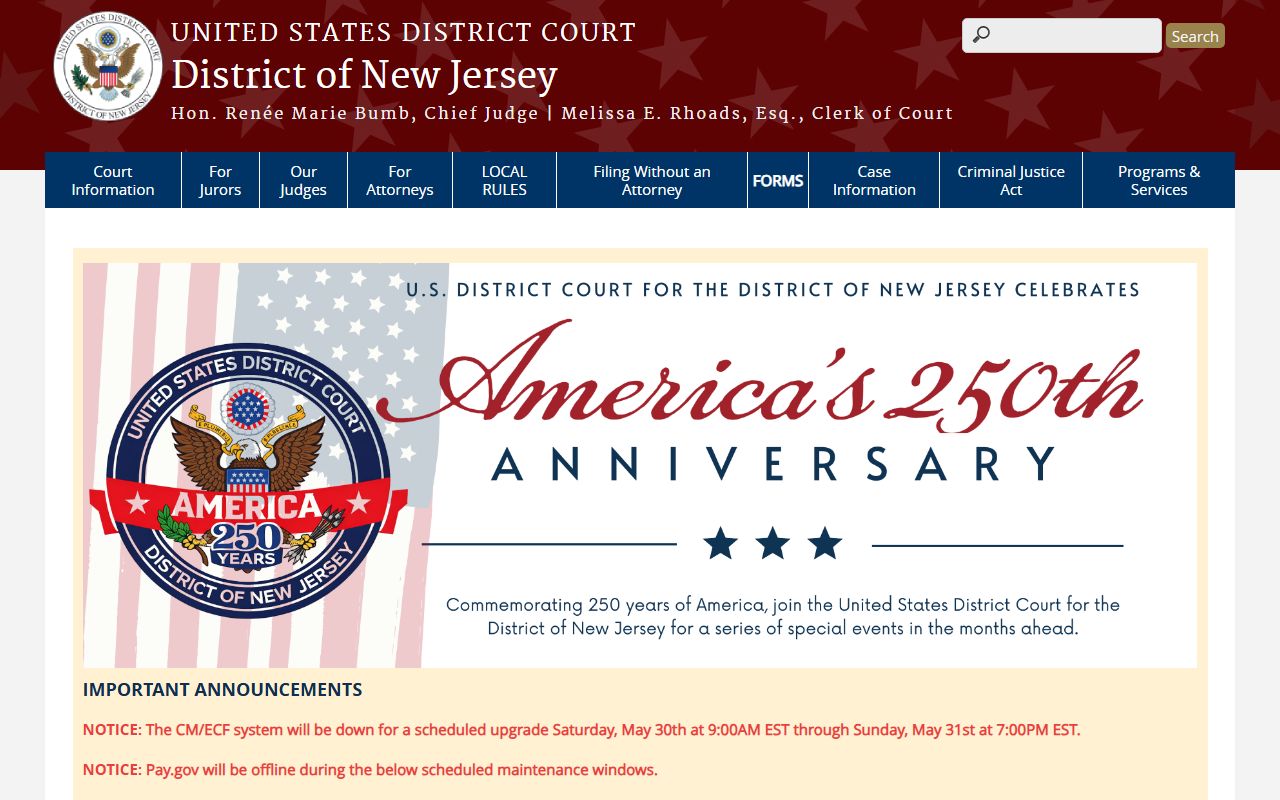
This is the New Jersey twist that confuses many people. The "District Court" in Essex is the federal court, not the state trial court. Essex County falls within the U.S. District Court for the District of New Jersey, which has courthouse operations in Newark. Federal civil and criminal cases there are entirely separate from the Superior Court.
See the U.S. District Court for the District of New Jersey for the federal trial court that covers Essex County.
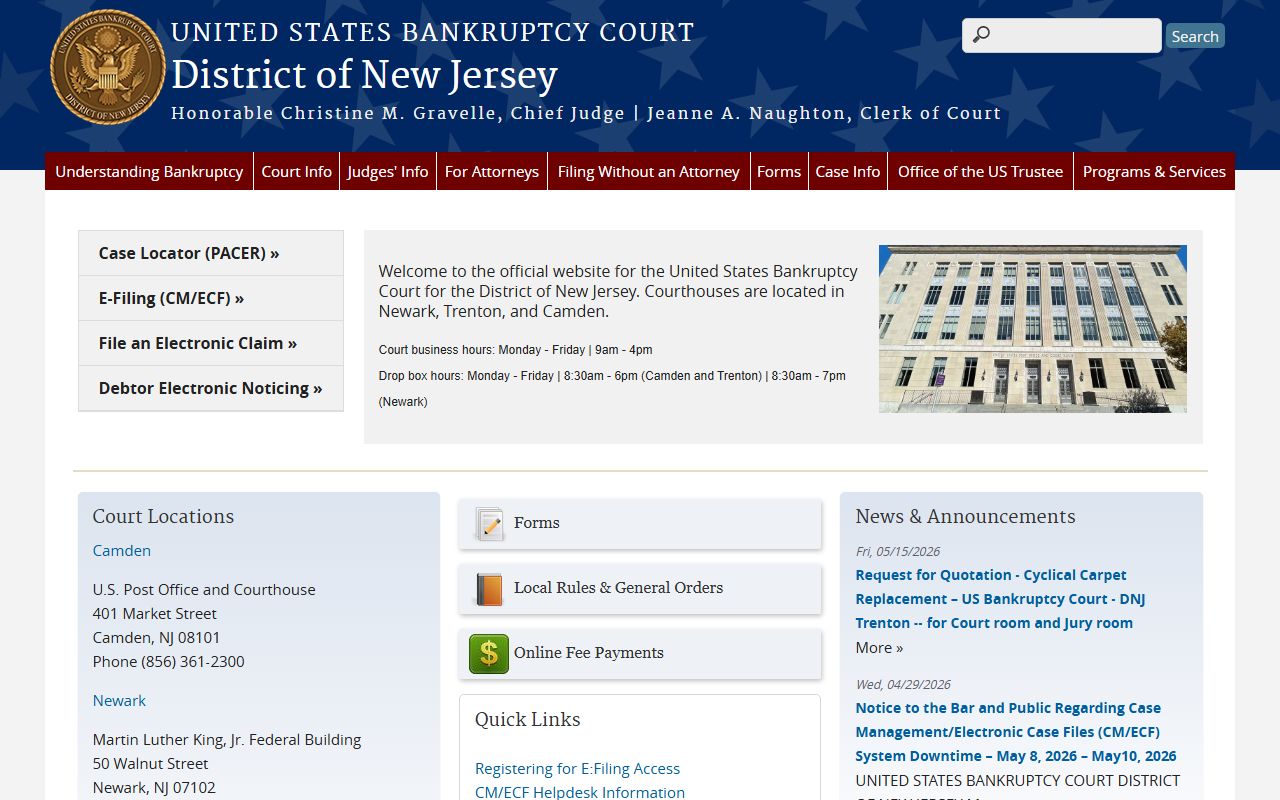
Federal bankruptcy cases go to a different court still, the U.S. Bankruptcy Court for the District of New Jersey.
See the U.S. Bankruptcy Court for New Jersey for federal bankruptcy matters tied to Essex County.
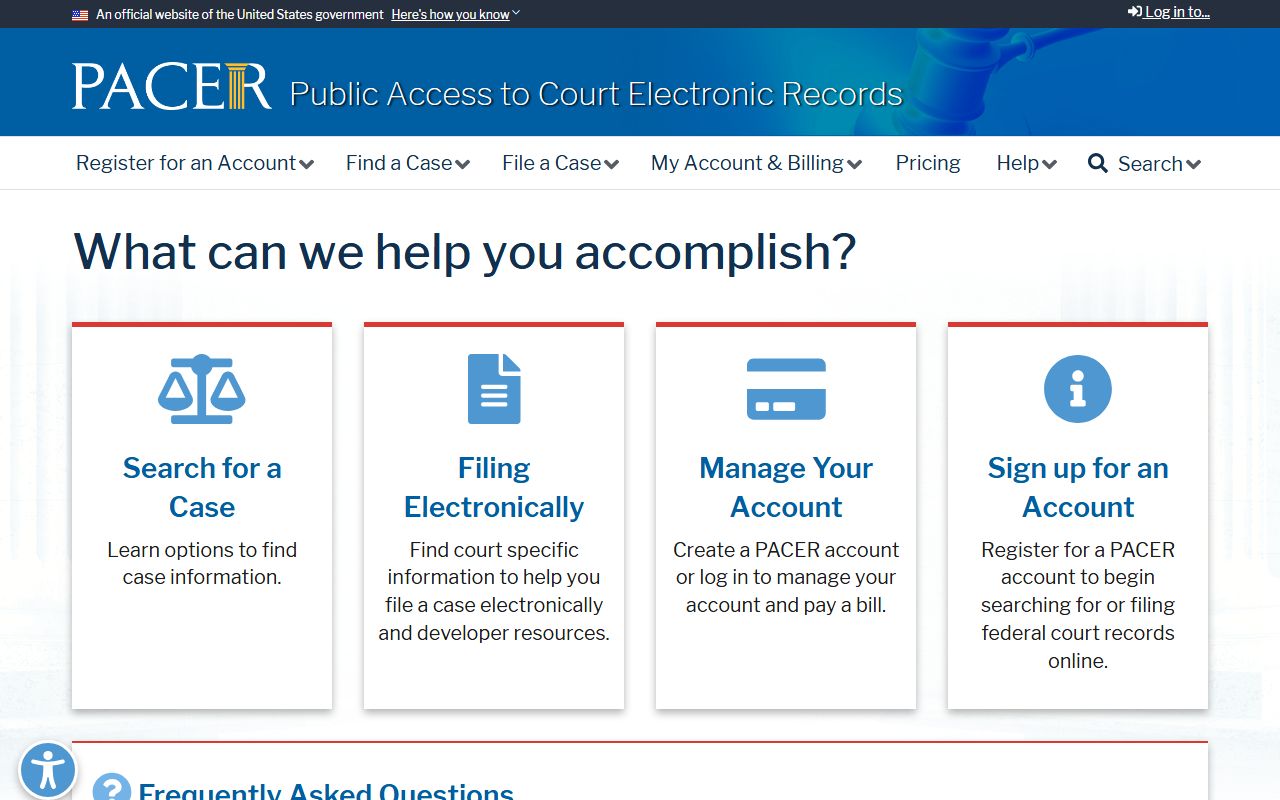
Federal case dockets are accessed through PACER rather than the state court portals.
Use PACER for federal case access when an Essex matter is in federal rather than state court.
Appeals from the District of New Jersey go to the U.S. Court of Appeals for the Third Circuit, a different path than state appeals. Federal criminal cases in Essex are prosecuted by the U.S. Attorney for the District of New Jersey, based in Newark, which is a separate office from the County Prosecutor. Keeping the state and federal systems straight saves a lot of confusion when you search for a case.